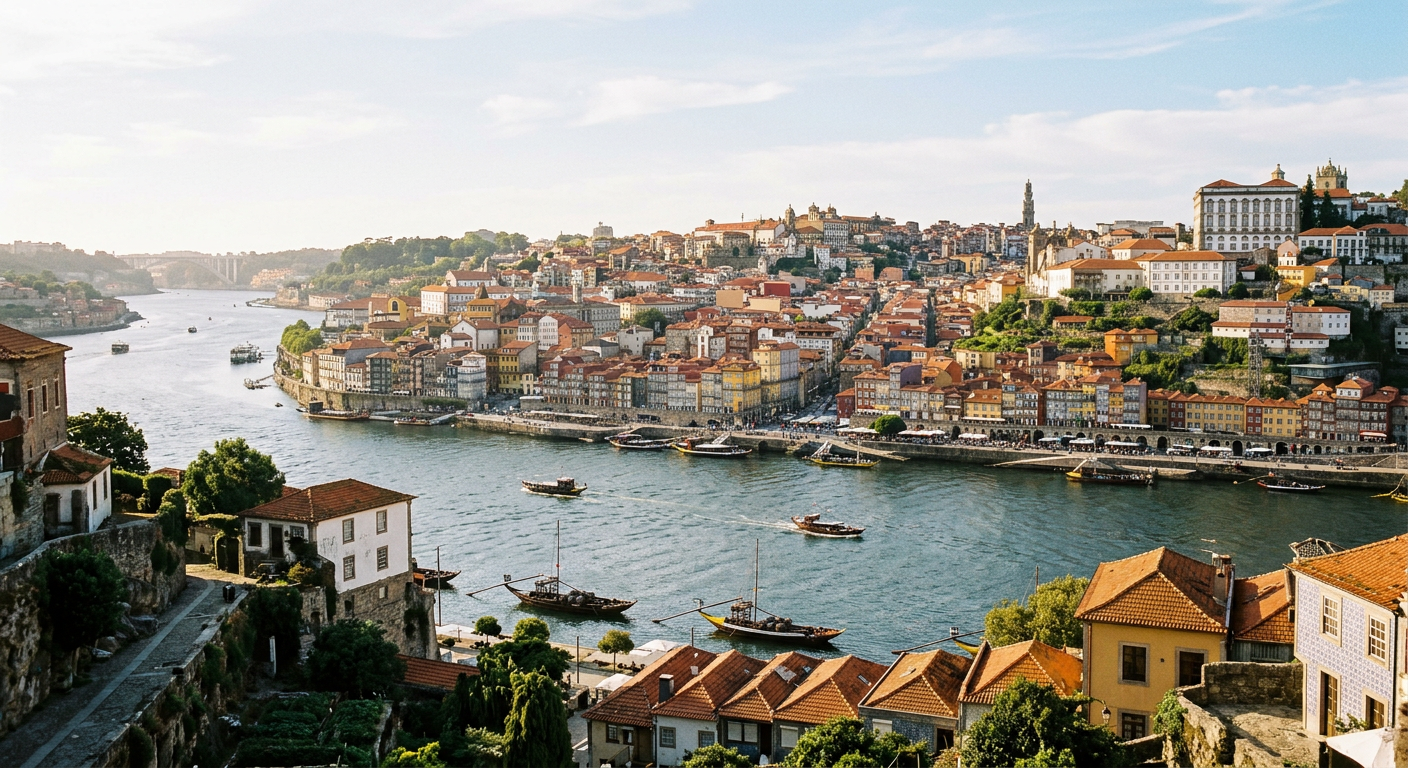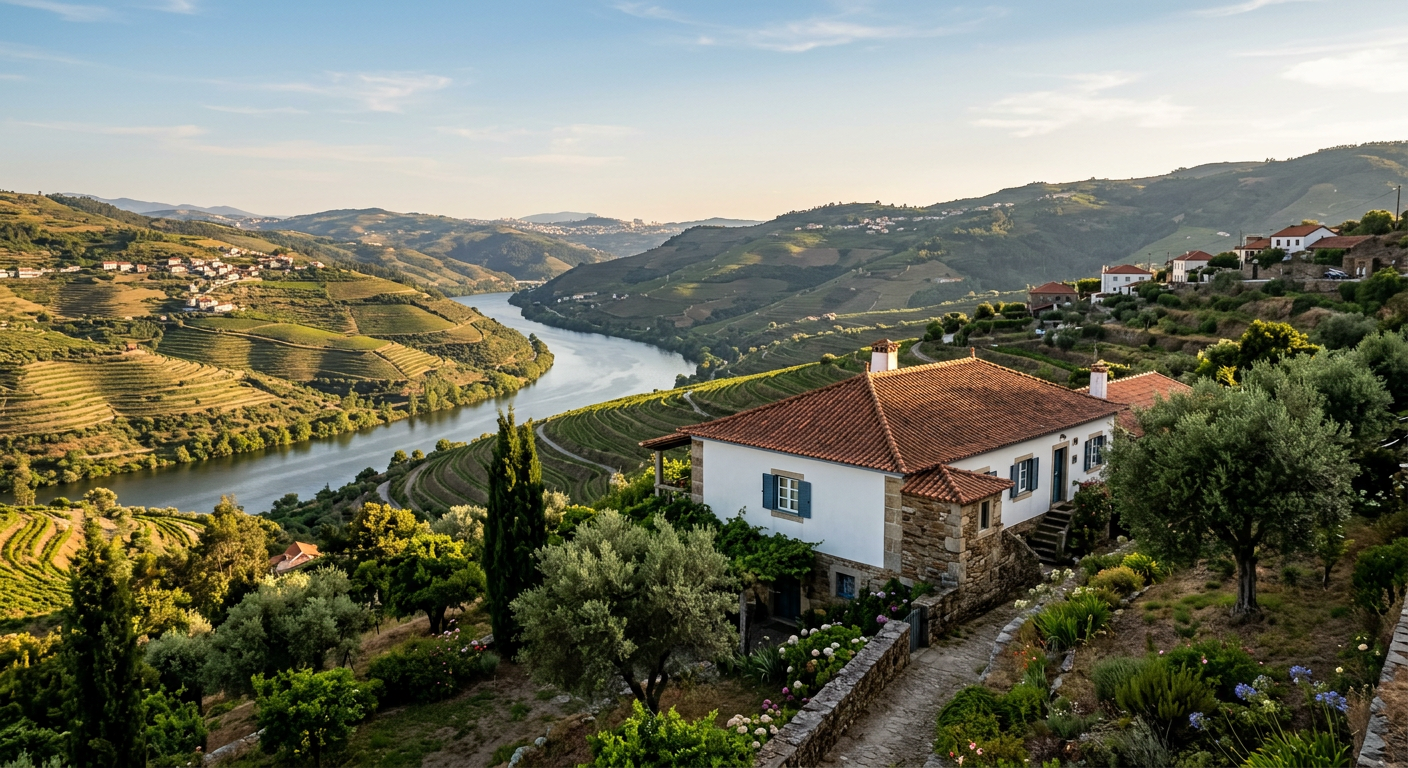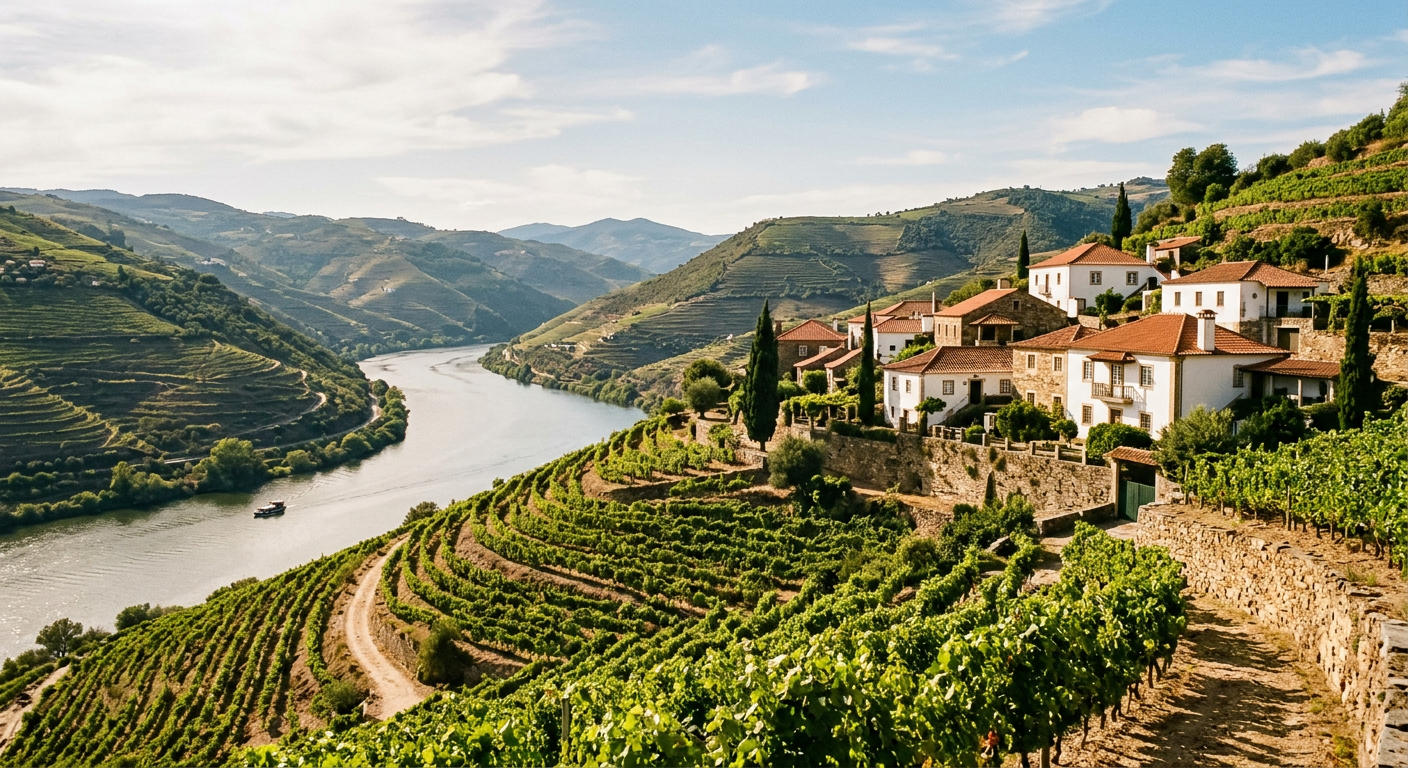

The gentle lapping of the water, the reflection of the morning sun on the river, and the view of historic rabelo boats gliding silently by: living on the Douro is, for many, the ultimate Portuguese lifestyle. Where the Douro River carves its path along the hills and flows into the Atlantic Ocean, a unique microclimate and an atmosphere found nowhere else in Europe are created. For those seeking a balance between the vibrancy of the city of Porto and the soothing expanse of flowing water, this region offers an unparalleled quality of life.
01The unique appeal of living on the Douro
The Douro River is the lifeblood of Northern Portugal. For centuries, it transported the famous port wines from the steep inland terraces to the cellars on the coast. Today, the riverbank atmosphere has been transformed into one of the most sought-after residential backdrops on the Iberian Peninsula. Choosing to buy a dream home on the Douro in Porto means choosing a permanent panoramic view that changes by the hour as sunlight brushes over the hills.
The real estate market around the river is highly diverse. On the north bank, you will find carefully restored townhouses with high ceilings and cast-iron balconies, while modern new-build projects focus on minimalist lines and large glass facades to make the most of the river views. Prestigious real estate in Porto attracts an international audience that values privacy, aesthetics, and an authentic culture.
"Living on the Douro means waking up every day to a backdrop that never gets old. The light reflecting on the water is constantly changing, and the combination of historic architecture and maritime tranquility gives this location a timeless value you won't find anywhere else in Portugal."
Loren Canaan, Advisor at Atlanticasa
02The different faces of the riverbank
The experience of living on the banks of the Douro depends heavily on the exact location you choose. Porto and its neighbouring municipality, Vila Nova de Gaia, complement each other seamlessly on opposite sides of the water, yet each has a distinct character.
From the bustling Ribeira to the stately Foz do Douro
The historic Ribeira district forms the postcard image of Porto, with its colourful facades and narrow alleys. While this area is extremely lively, those seeking peace find refuge slightly further downstream towards Massarelos and Foz do Douro. Here, the river slowly widens towards the ocean. Foz is known for its wide promenades, plane-tree-lined avenues, and stately villas. Living at this point offers the best of both worlds: the sheltered calm of the river and the fresh sea breeze of the Atlantic coast.
The open panorama from Vila Nova de Gaia
On the southern bank lies Vila Nova de Gaia. Historically, this is where the port wine houses are located, but in recent years, the quay has undergone an impressive modernisation. Residences on this side enjoy a phenomenal view of the historic centre of Porto, which has been declared a UNESCO World Heritage site. Luxury apartments with spacious terraces offer a wide view over the iconic Dom Luís I bridge and the softly lit monuments during the evening hours.
03What living on the Douro means for your daily rhythm
The pace of daily life along the river differs significantly from that in the rest of the metropolis. The quays invite an active lifestyle: from running along the bank in the early morning to relaxing walks along the wooden boardwalks at sunset. The Douro acts as a natural buffer against the hectic city traffic, resulting in a striking silence directly at the water's edge.
At the same time, refined gastronomy and culture are within reach. Around the banks, you will find both traditional taverns where fresh fish goes straight from the quay onto the grill, and renowned Michelin-starred restaurants that elevate classic Northern Portuguese dishes to the highest level. If you prefer the peace of the countryside at the weekend, you can follow the river inland towards the wine region, where living in a quinta: what you didn't know demonstrates how deeply the connection between people, landscape, and vines has been anchored here for generations.
04Practical considerations for a waterfront home
Buying a property on the water requires a keen eye for detail and good preparation. The microclimate at the river mouth brings specific characteristics that affect living comfort and maintenance.
- Moisture regulation and insulation: Due to the proximity to the river and the ocean, humidity is higher than further inland. Preferably choose renovated homes with modern double glazing and effective climate control.
- Orientation to the sun: The south bank (Gaia) faces north towards the historic centre, providing spectacular views but less direct sunlight indoors. The north bank (Porto) catches plenty of sun but looks towards the south.
- Accessibility and parking: In historic riverbank zones, streets can be narrow or pedestrianised. Check in advance if the property has its own garage or parking space.
- Legal status of waterfront plots: Properties close to the bank may fall under special coastal and river protection zones (REN and legislation regarding water management).
Despite these specific points of attention, the demand for river locations remains incredibly high. The scarcity of available building land along the banks ensures that an investment in real estate in Porto, Portugal always pays off for those looking at capital preservation and long-term value growth.
05Emigrating to Northern Portugal: comfort and amenities
For those considering a move to Portugal, Porto is a mature alternative to the more southern regions. While many initially look at the Algarve, the north offers a richer urban culture, excellent universities, and internationally highly-regarded hospitals. Matters such as health insurance in Portugal for foreigners explained are quickly arranged in Porto thanks to an extensive network of both public and private clinics.
The combination of a mild Atlantic marine climate, a vibrant international community, and the serene presence of the river makes the move to Porto surprisingly smooth and complete for many families and entrepreneurs.
06Frequently asked questions about living on the Douro
Is it damp living directly on the Douro River?
On the banks of the Douro, humidity is indeed higher than in the interior, especially during misty mornings in autumn and winter. However, modern construction methods, good wall insulation, and underfloor heating now solve this problem effortlessly. In older buildings, it is advisable to check if sufficient ventilation systems have been installed.
Are houses on the Douro suitable for permanent residence?
Certainly. Unlike some southern seaside resorts that become ghost towns in winter, life on the banks of Porto and Gaia remains dynamic throughout the year. Schools, shops, medical centres, and public transport (including the metro and cable car) function at full capacity twelve months a year.
What about flood risks along the Douro?
Since the construction of several upstream dams in the twentieth century, the water level of the Douro has been very accurately regulated. Only during exceptional combinations of persistent extreme rainfall and spring tides can the lowest quay strips in the Ribeira occasionally flood. Residential properties are almost always located well above this risk level.
07Find your dream waterfront home with Atlanticasa
The search for a home along the banks of the Douro requires local market knowledge, insight into zoning plans, and an eye for construction quality. Atlanticasa guides international buyers from the first viewing to the transfer at the notary. View our range of quality homes in the Porto region or contact our advisors today to make your living wishes on the Douro a reality.