
Do you dream of buying a house in sunny Portugal? The Portuguese real estate market offers wonderful opportunities, from charming townhouses to luxury villas by the coast. Before you take the step, it is crucial to have a clear picture of all additional costs. The purchase costs house Portugal can vary and are essential for drawing up a realistic budget. In this article, we take you through all the financial aspects, so you can realise your Portuguese dream well-prepared.
01Important taxes when purchasing property in Portugal
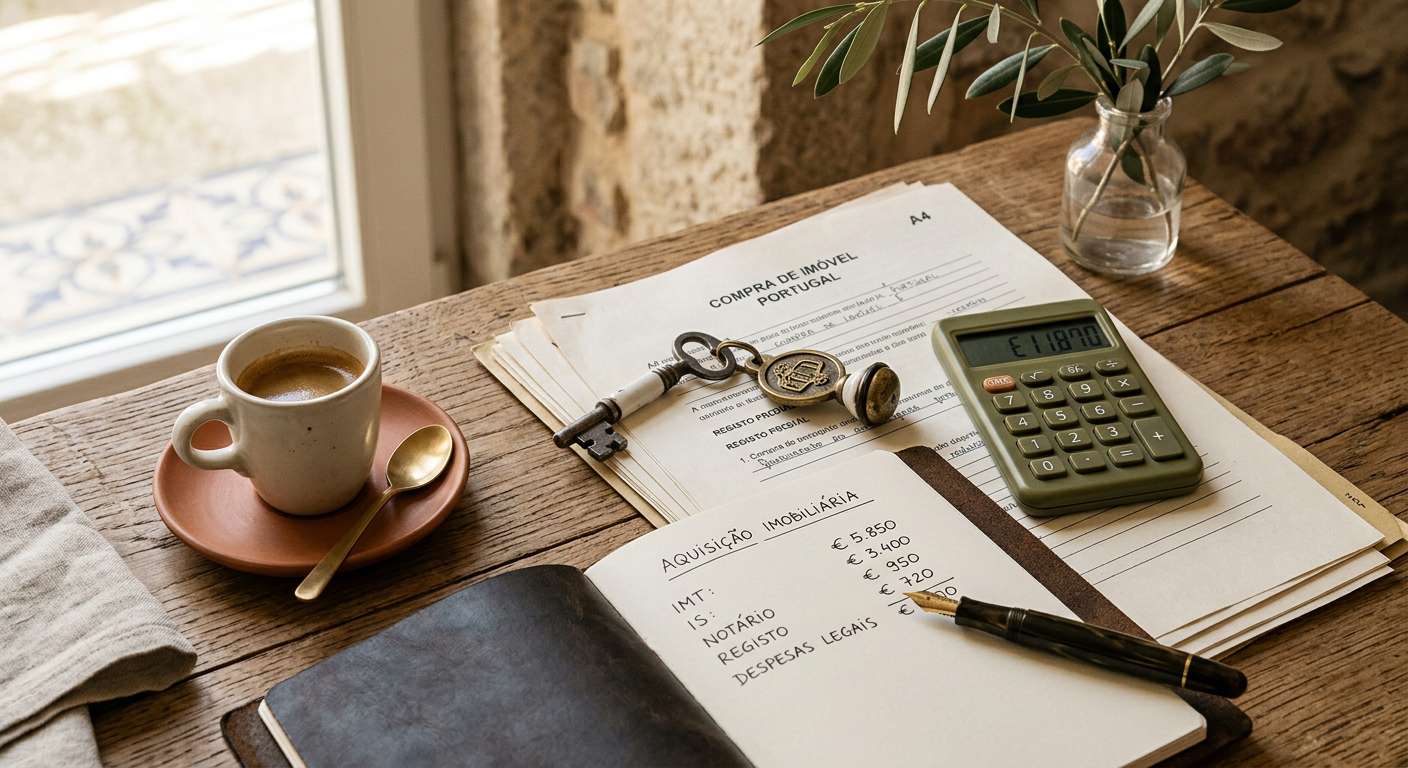
The Portuguese government levies various taxes on the purchase of property, which make up a significant part of the total purchase costs house Portugal. The most important of these is the Imposto Municipal sobre Transmissões Onerosas de Imóveis (IMT), or transfer tax. This tax varies depending on the nature of the property (permanent residence or secondary home), the price, and the location (mainland or autonomous regions such as Madeira or the Azores). IMT rates are progressive and can go up to 8% for more expensive homes.
In addition to the IMT, there is also the Imposto do Selo (IS), the stamp duty. This is levied on the transaction and currently amounts to 0.8% of the purchase value or the fiscal value, whichever is higher. It is important to include these amounts in your calculations. After the purchase, you will also deal with the Imposto Municipal sobre Imóveis (IMI), the annual property tax. You can find more details about ongoing tax obligations in our article on what wealth tax in Portugal entails.
02Notary and registration fees: essential expenses
With every property transaction in Portugal, there are costs for the notary and the land registry in addition to taxes. The role of the notary is crucial; he or she is responsible for drafting the deed of sale, checking all documents, and ensuring the legality of the transaction. Notary fees are legally fixed but can vary slightly depending on the complexity of the transaction and the notary themselves. Expect an amount of approximately 0.2% to 1% of the purchase value, excluding VAT.
Besides the notary, there are registration fees at the Conservatória do Registo Predial (Land Registry). This is where the new owner is officially registered. These costs are usually around 250 euros. Although the amounts for the notary and registration may seem small compared to the purchase price and taxes, they are indispensable and contribute to the total purchase costs house Portugal. Handling these steps carefully ensures a solid legal basis for your property.
03Costs for legal advice and due diligence
Hiring a specialised lawyer in Portugal is a wise investment that can save you a lot of problems and extra costs. A lawyer performs thorough due diligence on the property, checking all legal, financial, and urban planning aspects. This includes verifying title deeds, checking for debts or mortgages, reviewing building permits, and drafting the purchase contract.
The costs for legal advice usually vary between 0.5% and 1.5% of the purchase price, depending on complexity and the lawyer. It is advice that often pays for itself many times over, especially in larger transactions or when the situation is not entirely standard. A thorough guide to buying a house in Portugal emphasises the importance of this expertise to prevent unpleasant surprises. The investment in legal guidance is an essential part of your purchase costs house Portugal.
04Additional costs: agent's commission and inspections
In addition to the mandatory taxes and legal fees, there are often various additional expenses that influence the total purchase costs house Portugal. In Portugal, it is customary for the real estate agent's commission, if present, to be paid by the seller. However, this can be a point of negotiation. If you hire your own agent who exclusively represents your interests, separate agreements can be made for this.
Technical inspections and structural surveys
A structural survey (inspeção predial) is not a legal requirement in Portugal, but it is highly recommended. An independent expert assesses the technical condition of the property, detects any defects, and estimates the costs for necessary repairs. The costs for such an inspection can vary, but are usually between 200 and 800 euros, depending on the size and complexity of the home. This investment can protect you from unforeseen expenses after the purchase.
Also consider potential translation costs if you want the documents translated into your mother tongue. Although many professionals in Portugal speak English, the legally binding contract is always in Portuguese.
"Many people are surprised by the final purchase costs. A realistic estimate of the total investment, including all taxes and fees, is essential for a smooth transaction. We always advise our clients to keep a financial buffer of at least 10-15% on top of the purchase price for this."
Danny de Grijff, Advisor at Atlanticasa
05Financing costs and other considerations
If you take out a mortgage in Portugal, there are also costs involved. Think of valuation fees, administrative costs, mortgage setup fees, and potentially bank fees for opening a Portuguese bank account. These can vary per bank and mortgage product, but are an important factor in the total purchase costs house Portugal.
Practical tips for budgeting
- Create a detailed budget, including all aforementioned cost items.
- Take unforeseen costs into account: a reserve of 5-10% is not a luxury.
- Always request detailed quotes from notaries, lawyers, and inspectors.
- Compare interest rates and conditions from different banks if you need a mortgage.
- Don't forget the costs for home furnishings and any renovations if they are needed to create your dream home, for example in the Algarve.
In summary, the total purchase costs house Portugal including taxes, notary fees, legal fees, and registration average between 7% and 15% of the purchase price of the property, depending on the value and specific circumstances. It is crucial to include all these factors in your financial planning to avoid surprises. Whether you are looking for a villa in the Douro Valley or buying an apartment in the Algarve, thorough preparation is half the battle.
06Frequently asked questions about purchase costs house Portugal
Exactly how much transfer tax do I pay in Portugal?
The transfer tax (IMT) in Portugal is progressive and depends on the purchase price and intended use (permanent residence or second home). Rates for permanent residence are lower than for secondary homes. Maximum rates can go up to 8% for higher price segments, plus 0.8% stamp duty (IS) on the transaction value.
Are there costs I can reduce or avoid?
Some costs are mandatory (taxes, notary, and registration fees). However, you can save on legal fees by comparing quotes, or on mortgage costs by searching for the best mortgage offer. Not performing a structural survey is a false saving that could cost you dearly.
What are the annual costs for a house in Portugal besides the purchase costs?
After the purchase, you will deal with the annual property tax (IMI), which varies by municipality and property type (usually between 0.3% and 0.8% of the fiscal value of the home). Additionally, there are costs for utilities (water, electricity, gas), insurance, and, if applicable, condominium fees for apartments in buildings or resorts.
Ready to realise your dream of a house in Portugal? At Atlanticasa, we are ready to help. We guide you step-by-step through your purchase, from finding the perfect home to the key handover. View our range of quality real estate in Portugal and contact us today for a personal advisory meeting. Together, we will ensure a transparent and worry-free purchase experience.