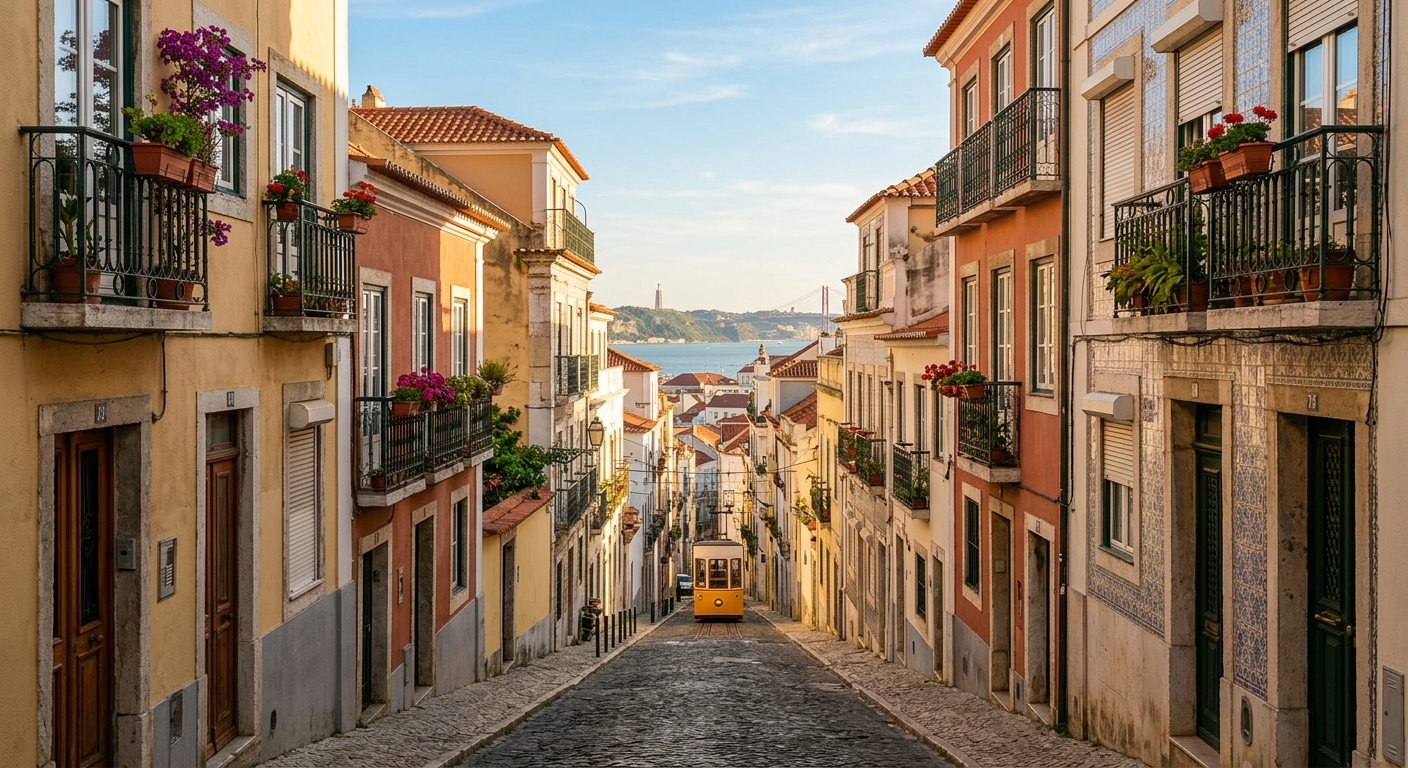

Those who take the step to choose expat Lisbon as their new home base quickly discover that the Portuguese capital offers a rare balance between dynamism and serenity. The combination of more than three hundred days of sunshine per year, a vibrant international business ecosystem, and the relaxed lifestyle on the banks of the Tagus makes the city irresistible. More and more Dutch entrepreneurs, digital nomads, and bon vivants are swapping hurried Northern Europe for the warm light and hospitality of this historic metropolis.
01The daily rhythm of an expat in Lisbon
Daily existence in Lisbon differs substantially from life in the Netherlands or Flanders. Where the workday in Northern Europe often proceeds in a rigid and hurried fashion, here a culture prevails where personal encounters and quality of life are central. The morning usually begins with an espresso and a freshly baked pastel de nata at the local pastelaria on the corner, where neighbours and newcomers greet one another.
For those who decide to live in Lisbon, the city offers unparalleled versatility. Lisbon is compact enough to traverse on foot or via the excellent public transport, but large enough never to be boring. Within twenty minutes, you can have your feet in the sand at the beaches of Carcavelos or Costa da Caparica, while the historic centre is packed with museums, top restaurants, and lively squares. It is precisely this harmonious interplay between work and relaxation that makes an expat in Lisbon feel immediately at home.
02Choosing neighbourhoods: where to settle as an expat in Lisbon
The Portuguese capital consists of a patchwork of neighbourhoods, each with its own distinct identity, architecture, and atmosphere. Finding the right location depends heavily on your family situation, work style, and personal preferences. Thoroughly exploring the different neighbourhoods of Lisbon is therefore an essential first step in any emigration.
Professionals who enjoy grand avenues, boutiques, and excellent restaurants often feel immediately at home in Santo António or around the prestigious Avenida da Liberdade. Those who prefer an artistic, village-like atmosphere with viewpoints over the river more often choose Príncipe Real or Estrela. These neighbourhoods combine lush city parks with a safe, quiet living environment, making them also very popular with young families.
Are you looking for contemporary architecture, spacious apartments with private parking, and fast connections to the international airport? Then Parque das Nações, on the northeast side of the city, is a modern alternative. For those seeking peace and proximity to international schools, the appeal of the region extends to the leafy coastline of Cascais and Estoril.
03Purchasing quality real estate in Lisbon
The real estate market in the Lisbon region has undergone an impressive professionalisation over the past ten years. Where many historic buildings once stood empty, numerous properties have now been renovated into luxurious apartments that meet the highest modern construction standards. High-quality real estate in Lisbon remains in high demand, both for owner-occupation and for long-term wealth preservation.
"Many of our clients start their search with the idea of renting first, but soon realise that purchasing a solid property in Lisbon offers much more peace and security, both financially and emotionally." Tijmen Verbaarendse, Advisor at Atlanticasa
During the purchasing process, foreign buyers deal with specific legal procedures, such as the promissory purchase contract (Contrato de Promessa de Compra e Venda) and the transfer at the notary (Escritura). A thorough check of the title deed, building permits, and any easements is indispensable. A buying agent who knows Portuguese law and understands the expectations of demanding Northern European buyers prevents unpleasant surprises.
04Practical steps for a smooth integration
A successful transition to Portuguese life requires more than just finding a dream home. Administrative and practical preparation lays the foundation for a worry-free start as an expat in Lisbon. Although the bureaucracy sometimes requires a bit more patience than in the Netherlands, the process proceeds clearly when you follow the correct sequence.
- Apply for your NIF in time: The Número de Identificação Fiscal is your Portuguese tax number. Without this number, you cannot open a bank account, sign a rental or purchase contract, or set up utilities.
- Open a local bank account: Although a European account works within the SEPA zone, Portuguese government agencies and utility companies often require a local account for direct debits and the Portuguese Multibanco system.
- Arrange your health insurance: Ensure you have timely insight into the coverage of the public health system (SNS) and consider additional private insurance. Read our explanation on health insurance in Portugal for Dutch nationals to know exactly where you stand.
- Learn the basics of the language: Although English is widespread in Lisbon on the streets and in business, a little Portuguese opens the doors to a deeper connection with the local community.
- Register as a resident: EU citizens staying in Portugal for longer than three months must register with the local municipality (Câmara Municipal) to receive a Certificado do Registo de Cidadão da União Europeia (CRUE).
05Social life and networking in the capital
One of the greatest advantages of living in Lisbon is the welcoming social climate. The expat community is remarkably diverse: from tech entrepreneurs and creatives to retired diplomats and international consultants. Co-working spaces such as Second Home and numerous specialised networking clubs organise weekly gatherings where you can easily meet like-minded people.
At the same time, Portugal is known for effortlessly absorbing foreigners into social life. Portuguese people are generally modest, friendly, and extremely helpful. Those who show respect for local customs, appreciate the rich history, and participate in neighbourhood festivals such as the Festas de Santo António in June, will feel like a full part of the neighbourhood in no time.
06Frequently asked questions about expat life in Lisbon
Is English sufficient to live and work comfortably in Lisbon?
In Lisbon, a large part of the population, especially among younger generations and in business services, speaks excellent English. For daily shopping, hospitality, and business, you can manage effortlessly. However, for contact with government agencies and for deeper integration into the local community, learning Portuguese is strongly recommended.
How safe is Lisbon compared to other European cities?
Portugal consistently ranks among the safest countries in the world according to the Global Peace Index. Lisbon has very low crime rates, especially regarding violent crime. As in any major tourist capital, you should be mindful of pickpockets on busy tram lines and in nightlife areas, but generally, the city feels particularly safe and relaxed day and night.
What are the options for international education in and around Lisbon?
The region around Lisbon and Cascais has a wide range of renowned international schools. There are British, American, French, and German schools offering the International Baccalaureate (IB) or national curricula. Many expat families settle specifically in the Lisbon-Oeiras-Cascais triangle due to the short distance to these educational institutions.
07Find your ideal property in Lisbon with Atlanticasa
Are you considering the move to Portugal and looking for a stylish apartment in the historic centre or a modern villa on the coast? View our listings of carefully selected properties or contact our team for discreet and expert purchasing advice in your own language.