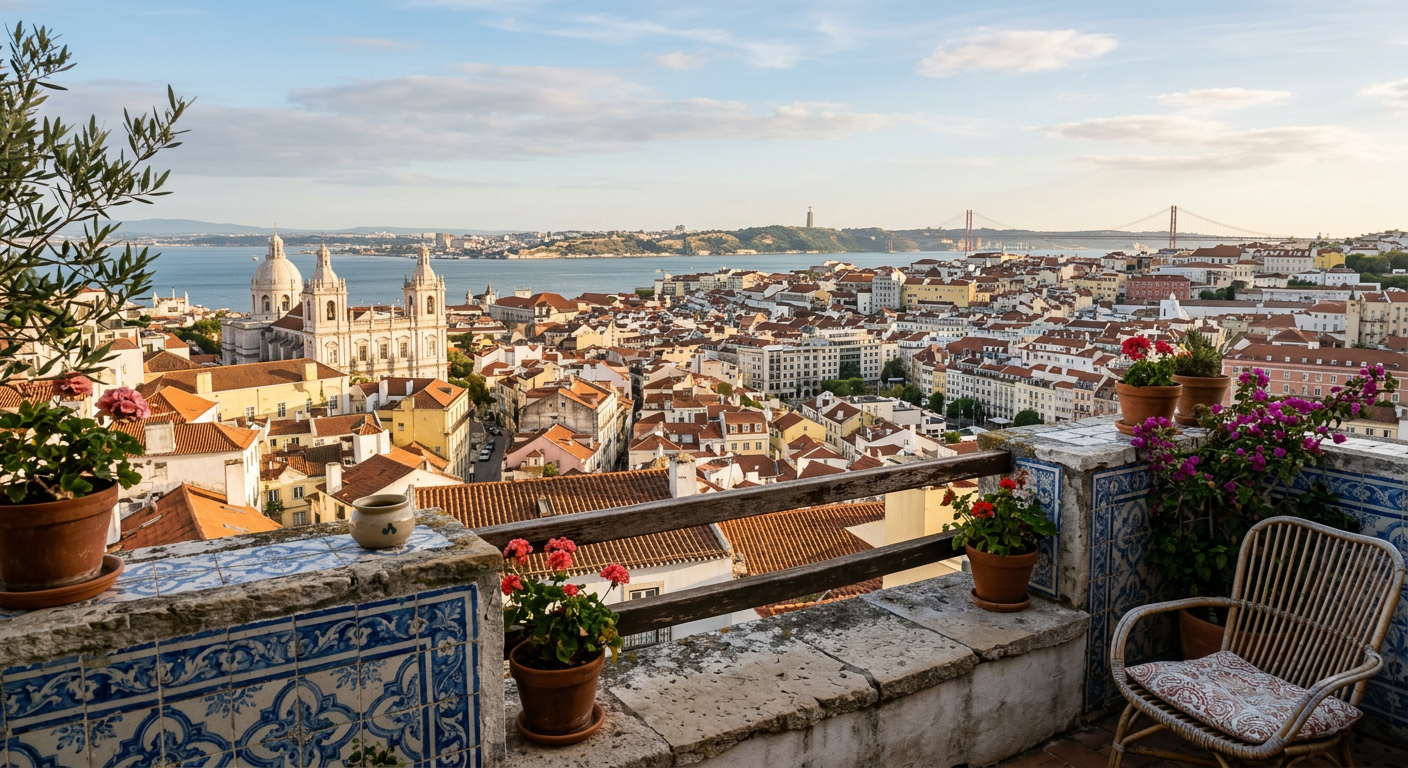

The Portuguese capital has emerged in recent years as one of Europe's most sought-after residential destinations. Increasingly, professionals, entrepreneurs, and epicureans are choosing a new chapter on the banks of the Tagus. That living in Lisbon particularly appeals to Dutch people is no coincidence: the combination of over three hundred days of sunshine per year, a relaxed pace of life, excellent international connections, and a safe living environment perfectly matches the desires of those seeking both peace and urban dynamism.
Yet, emigrating or purchasing a second home abroad requires a well-thought-out approach. The dynamics of the local real estate market are constantly shifting, and laws and regulations differ substantially from the Dutch situation. Those who choose living in Lisbon Portugal quickly discover that thorough preparation forms the foundation for a carefree stay in the city of soft light.
01Why living in Lisbon continues to attract Dutch people
What makes the transition from Amsterdam, Utrecht, or Rotterdam to Lisbon so attractive? For many Dutch people, the answer is two-fold: quality of life and perspective. Daily life takes place largely outdoors. An espresso on a sun-drenched terrace (a bica), walking along the quays of Alcântara, or being on the beach of Carcavelos or Costa da Caparica within twenty minutes; these are luxury elements that are hardly imaginable in Northern Europe on workdays.
Furthermore, Lisbon has become a cosmopolitan melting pot. The tech scene is flourishing, there is a vibrant international community, and English proficiency among Portuguese people is exceptionally high compared to other Southern European countries. This significantly lowers the barrier for integration. Dutch people also appreciate the open, hospitable, and tolerant nature of the local population, which helps children settle quickly into international schools and allows friendships to be built easily.
"Interest from our fellow countrymen in Lisbon is clearly shifting from pure investment returns to a true living experience. The Dutch fall for the authentic character of historical neighbourhoods but expect modern comfort, insulation, and high-quality finishes indoors. That combination is scarce, but with the right local guidance, it is absolutely findable."
— Tijmen Verbaarendse, Advisor at Atlanticasa
02The most popular neighbourhoods for Dutch people to live in Lisbon
Lisbon is built on seven hills, and each hill tells its own story. The choice of district largely determines how you experience daily life. While one person longs for the cobbled streets and fado melodies of the old city, another opts for wide avenues and modern apartment complexes with parking and concierge services.
Those orienting themselves on the different neighbourhoods of Lisbon will notice that the preferences of Dutch buyers often lean towards a select number of residential zones:
- Príncipe Real & Santo António: Loved for the stately 19th-century mansions, leafy squares, design boutiques, and excellent gastronomy. A neighbourhood with a distinct international and creative flair.
- Campo de Ourique: A traditional, nearly flat residential area with a village feel. Known for its lively indoor market, artisanal shops, and child-friendly streets, ideal for families.
- Estrela & Lapa: Quiet diplomatic districts with elegant palaces, private gardens, and the beautiful Jardim da Estrela. Here you enjoy silence and grandeur just a short distance from the city centre.
- Parque das Nações: The ultra-modern district on the north-east side of the Tagus, developed around Expo '98. Wide boulevards, sleek new-build apartments, a modern marina, and excellent schools attract entrepreneurs and young families in particular.
- The coastal axis towards Cascais: For those who want to combine the dynamics of the city with the ocean breeze, suburbs such as Belém, Oeiras, and Cascais are a logical extension of the search for quality real estate in Lisbon.
03Practical matters when settling in the Portuguese capital
A smooth transition to Portugal requires insight into local administrative processes. The first step for every foreign resident or buyer is applying for a Portuguese tax number (NIF, Número de Identificação Fiscal). Without this number, it is impossible to open a bank account, purchase a property, or set up utilities.
The Portuguese healthcare system is also an important consideration. Portugal has a well-functioning public health system (SNS, Serviço Nacional de Saúde), but most expats and international residents also opt for additional private coverage to bypass waiting times and gain access to private clinics such as Hospital da Luz or CUF. A clear understanding of health insurance in Portugal for Dutch people helps you be properly covered from day one.
04Practical tips for those taking the leap
To prevent disappointments and ensure the relocation or purchase process runs smoothly, our advisors have listed the most important tips:
- Hire an independent purchase lawyer: In Portugal, the notary only handles legal registration, not the interests of the buyer. A specialised lawyer (advogado) thoroughly checks building permits, debts, and title deeds.
- Consider build quality and insulation: Many historical buildings are charming but lack central heating or double glazing. Pay close attention to damp proofing, sun exposure, and energy labels during viewings.
- Experience the neighbourhood at different times: Rent an apartment temporarily in your preferred district first. Visit the street on a Tuesday morning and a Saturday night to get a realistic picture of noise and atmosphere.
- Arrange financing in advance: Portuguese banks generally finance up to 70 to 80 percent of the appraised value for non-residents. Ensure your financial file is in order in good time.
- Learn the language: Although you can get far with English, even a basic knowledge of Portuguese opens doors with government agencies, neighbours, and local business owners.
05Buying real estate in Lisbon with Atlanticasa
The real estate market in Lisbon is demanding and has significant quality differences. A property that looks renovated on the surface may be structurally lacking, while the best off-market objects rarely reach the large public portals. Atlanticasa acts as your expert, Dutch-speaking buying agent on the ground. We select only residences that meet Northern European standards in terms of comfort, legal clarity, and finishing.
Want to know which apartments, penthouses, or townhouses are currently available in the city's best neighbourhoods? View our listings and schedule an exploratory conversation with our regional experts.
06Frequently asked questions about living in Lisbon
Has life in Lisbon become more expensive for Dutch people?
As in other European capitals, house prices and rental rates in Lisbon have risen. Nevertheless, the cost of daily living — such as dining out, fresh groceries, public transport, and cultural activities — remains significantly lower than in the Netherlands, contributing to an attractive disposable income.
What about tax rules when I move to Portugal?
The former NHR regime (Non-Habitual Resident) has recently been reformed, but Portugal still offers targeted tax arrangements for specific professional groups, researchers, and innovative entrepreneurs. Always seek advice from a cross-border tax advisor beforehand to map out your individual situation.
Are there good international schools in and around Lisbon?
Yes, the Lisbon region has an excellent network of international and bilingual schools. From the renowned British Council and St. Julian's School in Carcavelos to international schools in Campo de Ourique and Parque das Nações; high-level education with the International Baccalaureate (IB) is widely available.


