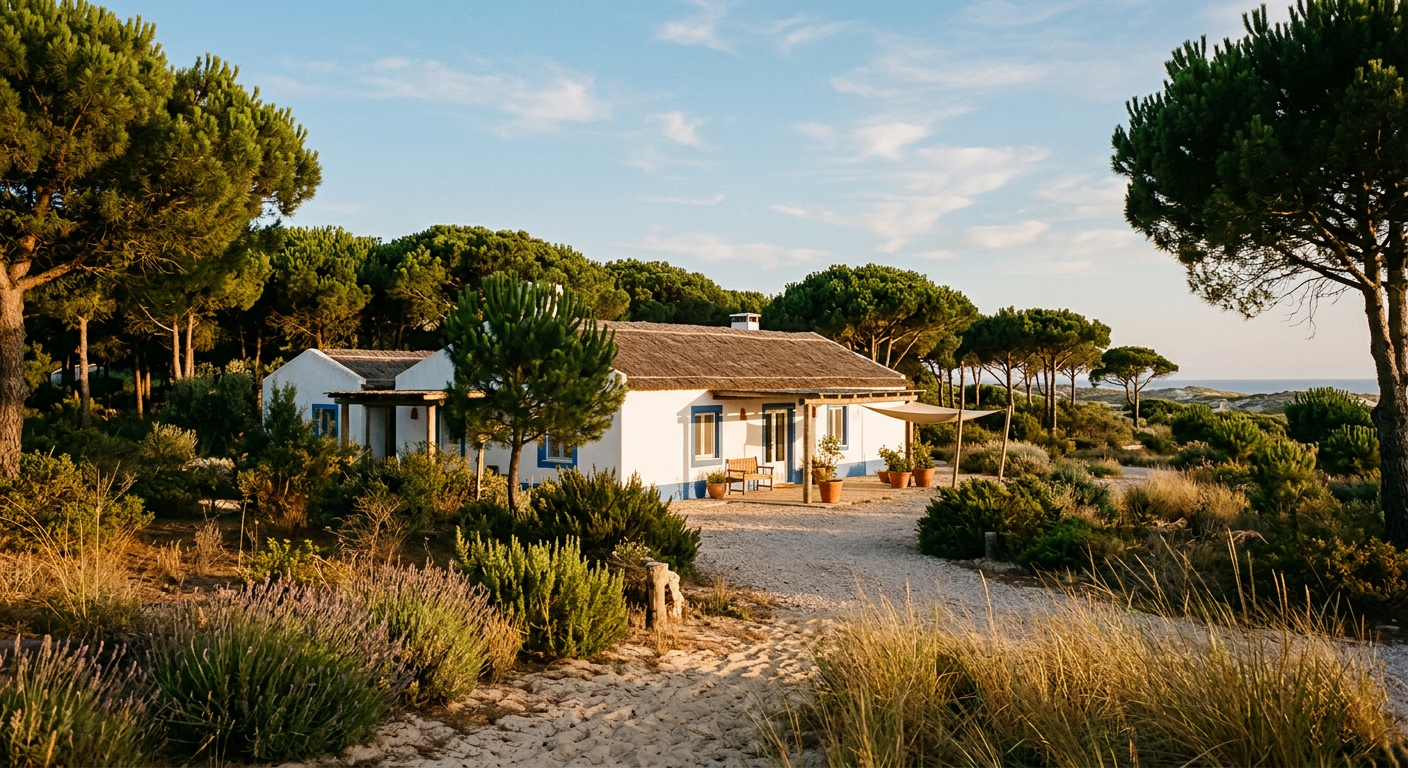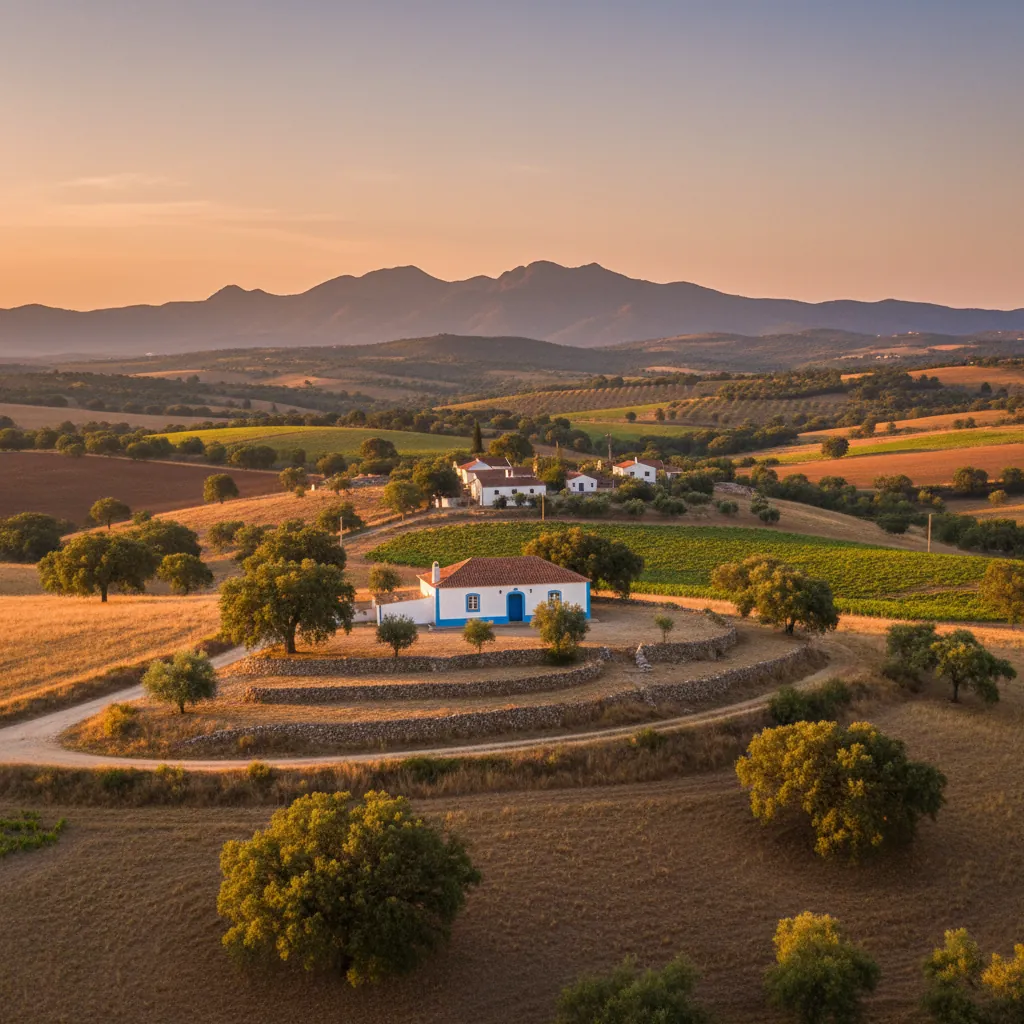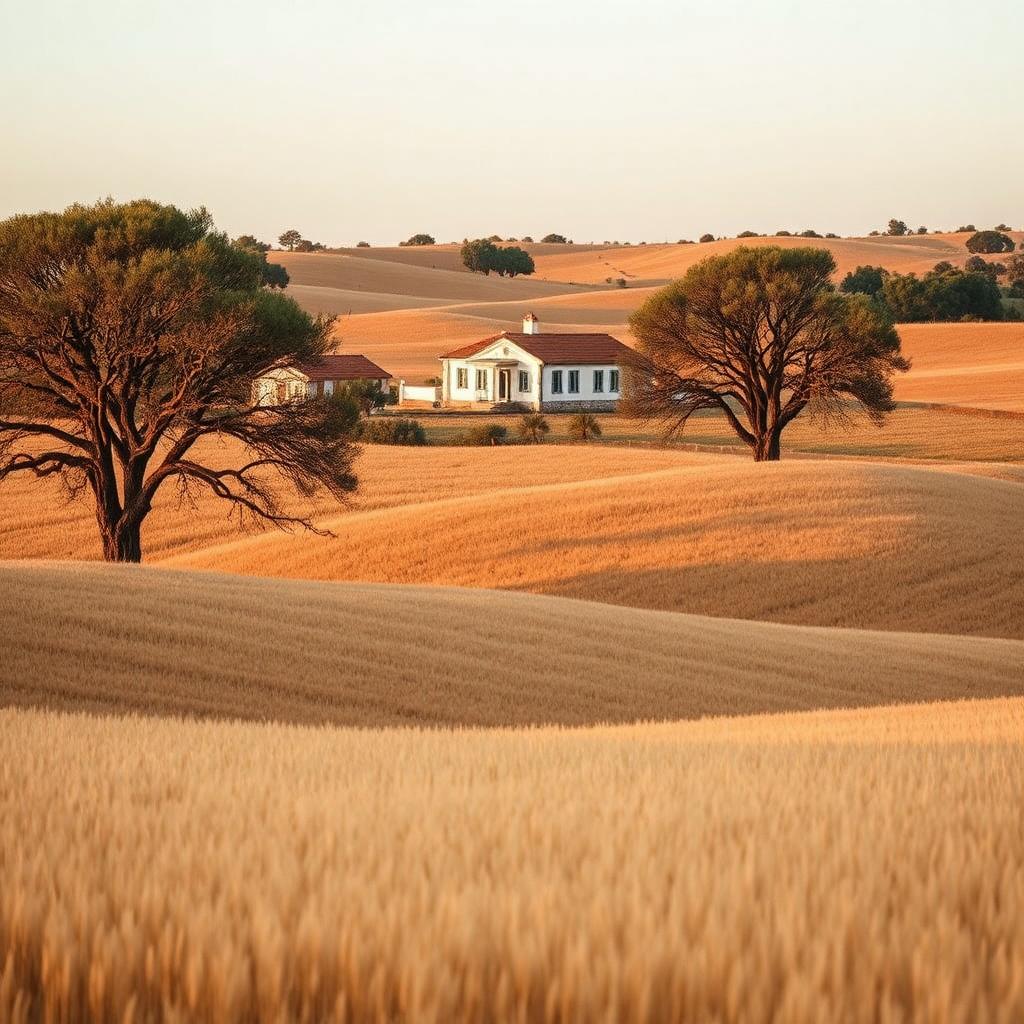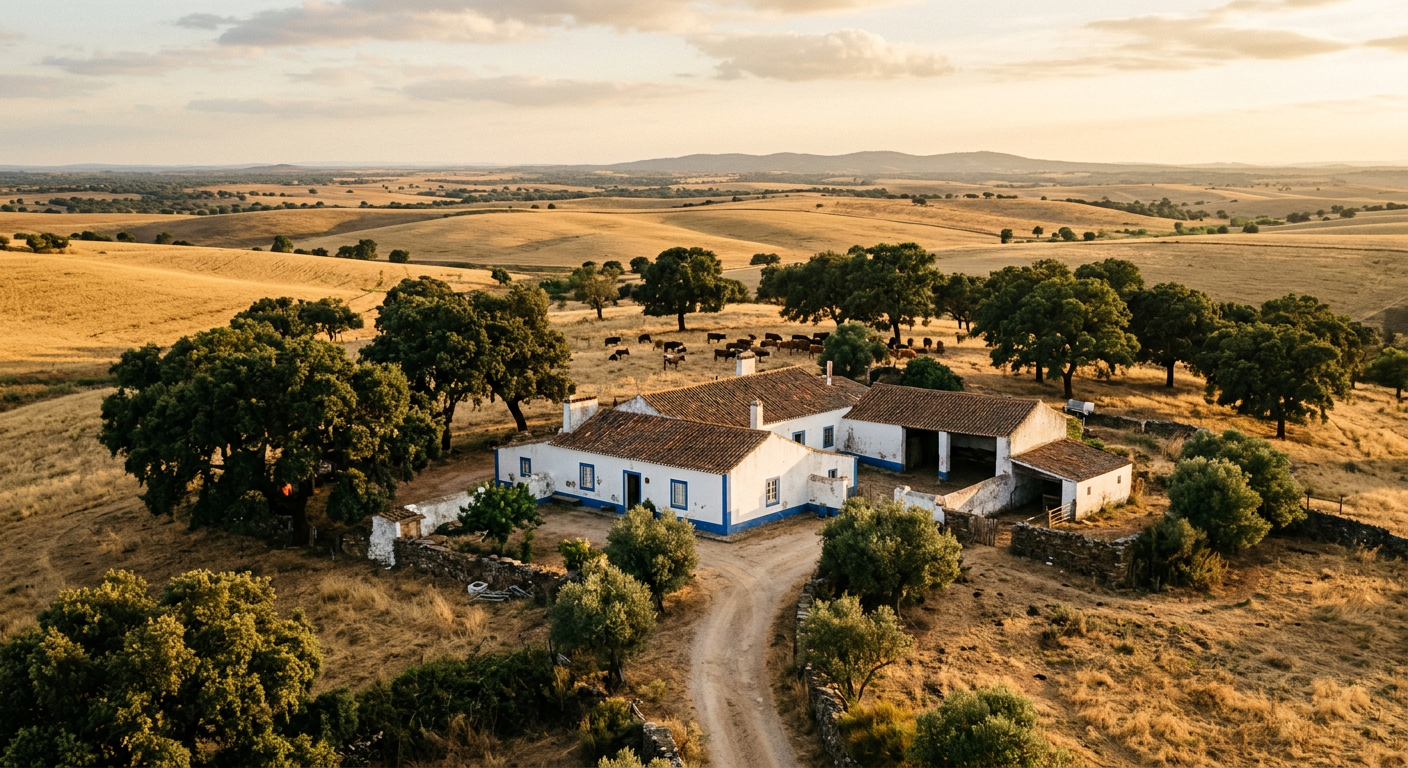

Do you dream of endless vistas over golden hills, ancient cork oaks, and the serene peace of the southern countryside? Anyone looking for a traditional farmhouse in Portugal in the Alentejo steps into a world where time is still a tangible concept. The Alentejo, which covers roughly a third of the Portuguese land surface, is the ultimate destination for bon vivants, peace-seekers, and lovers of authentic rural living. Here you won't find overcrowded boulevards, but rather vast estates, olive groves, and an unparalleled starry sky.
Buying a typical Portuguese farmhouse, often locally called a monte alentejano, is however a different process than buying a modern city apartment. It requires specific knowledge of zoning plans, agricultural regulations, and local building traditions. As a specialised real estate agency, Atlanticasa guides buyers in realising this special living dream, from the first viewing to the official transfer of ownership at the notary.
01Why a farmhouse in Portugal in the Alentejo is so popular
The Alentejo is known for its soothing rhythm and untouched nature. While the coastal regions of Portugal are characterised by liveliness and tourist dynamics, the interior of the Alentejo offers a rare sense of freedom and space. More and more people choose living in Alentejo in Portugal to escape the hectic pace of everyday life.
A characteristic farmhouse in this region is often situated on a hilltop, which directly explains the traditional concept of the monte. Historically, these farms were built on higher points to keep an overview of the land and benefit from cooling breezes during the hot summers. Today, they offer residents plenty of privacy, a generous piece of land, and excellent opportunities for self-sufficient living, permaculture, or growing their own wine and olive oil.
In addition, the climate is particularly pleasant. With more than three hundred days of sunshine per year, mild winters, and warm, dry summers, outdoor living is the standard here. Moreover, cities like Évora (a UNESCO World Heritage site), Estremoz, and Monsaraz are within easy reach, meaning culture, gastronomy, and modern amenities are never far away.
02The different regions for your farmhouse in the Alentejo
The Alentejo is geographically enormous and diverse. Depending on your wishes regarding landscape, temperature, and accessibility, there are roughly three main areas to distinguish when you decide to seriously explore buying a house in Alentejo:
Alto Alentejo: green, hilly, and historic
The northern part, bordering Central Portugal and Spain, is strikingly green and hilly. Around the Serra de São Mamede Natural Park, you will find a lusher landscape with granite rock formations, chestnut trees, and vineyards. Villages like Marvão and Castelo de Vide exude a medieval atmosphere. A farmhouse in Alto Alentejo often has more relief on the plot and benefits from slightly cooler summers and abundant natural water sources.
Baixo Alentejo: vast plains and rustic grandeur
Towards the south, around Beja, Mértola, and Serpa, the landscape transforms into the iconic rolling plains of golden-yellow grain and vast cork oak forests (montados). The plots here are generally considerably larger. Those looking for a royal estate with dozens of hectares of land to keep horses, grow olives, or simply experience complete seclusion will find exceptional opportunities in Baixo Alentejo.
Alentejo Litoral: the best of rural and coast
Along the Atlantic coastal strip, the Alentejo Litoral combines the rustic farmhouse feeling with proximity to the ocean. Places such as Santiago do Cacém, Odemira, and the hills behind Melides and Porto Covo offer charming farmhouses within a short distance of pristine beaches. Due to the popularity of the coastline, prices in this strip are generally higher, but the combination of rural peace and sea air makes it a highly sought-after investment.
03Legal and practical points of interest for rural real estate
The purchase process for a farmhouse in the Portuguese countryside has several specific challenges that differ from regular residential real estate in urban areas. Thorough preparation is essential. In our complete guide to buying a house in Portugal, we explain the general legal steps, but extra points of attention apply to agricultural properties.
Many farmhouses consist of two components: an urban part (artigo urbano), being the living space, and a rustic part (artigo rústico), being the surrounding land. It is crucial that both parts are legally correctly registered in both the land registry (Registo Predial) and with the tax authorities (Finanças). It frequently turns out that outbuildings, stables, or extensions were built without a permit in the past.
"Buying a farmhouse in the Alentejo requires thorough legal research. Often the boundaries of rustic plots have not been updated for decades. We ensure that every metre of land, from water well to olive grove, is watertight on paper."
— Danny de Grijff, Advisor at Atlanticasa
In addition, environmental restrictions play a role. Is the land located in an ecological protection zone (REN) or an agricultural reserve zone (RAN)? If so, strict rules apply to renovations, extensions, or new builds. Water supply is also a priority inspection point: does the domain have its own borehole (furo), a traditional well (poço), or a water reservoir (barragem), and are the permits for water extraction present?
04Practical checklist for purchasing your farmhouse
To ensure your search and eventual purchase proceed smoothly and safely, we advise you to take the following practical steps into account:
- Check water rights and installations: Have the capacity and water quality of the borehole or well tested, especially for use in drier summer months.
- Verify plot boundaries with a surveyor: Older title deeds often state boundaries based on landmarks such as trees or stone walls. A modern topographical survey prevents disputes with neighbours.
- Investigate the right of first refusal of neighbours: When selling rustic land, adjacent landowners have a right of first refusal (direito de preferência) under certain legal conditions. This formal process must be correctly followed.
- Assess the electricity supply: Is the property connected to the public power grid, or is the location perfect for a modern, self-sufficient solar energy system with a battery bank?
- Check fire safety zones: In Portugal, clear rules apply to keeping vegetation clear around inhabited rural properties to prevent wildfires.
05Frequently asked questions about buying a farmhouse in the Alentejo
Can I simply extend or renovate a farmhouse in the Alentejo?
No, any constructive adjustment requires permission from the local municipality (Câmara Municipal). If the property is on agricultural land (RAN) or protected nature land (REN), extension possibilities are often limited to a certain percentage of the existing registered floor area. Renovating the existing buildings within the current footprint is usually possible with the right permits.
What about internet and accessibility in the Portuguese countryside?
Portugal has an excellent telecom infrastructure. Many rural villages are connected to fibre-optic internet. For very remote farmhouses, satellite internet (such as Starlink) offers a reliable and high-speed connection, meaning remote working on a monte alentejano is completely hassle-free these days.
Is it profitable to rent out a farmhouse in the Alentejo for holiday use?
Certainly. Agri-tourism (turismo rural) has experienced strong growth in the Alentejo. Travellers look for authenticity, privacy, and peace, far away from mass tourism. If your farmhouse has the correct tourist permit (Alojamento Local or a specific rural classification), this can provide an attractive return.
06Find your dream farmhouse in the Alentejo with Atlanticasa
Finding the perfect farmhouse in Portugal requires local market knowledge, legal sharpness, and a keen eye for construction quality. Atlanticasa assists you throughout the entire purchase process in your own language, from the selection of properties to the formal notarial transfer. Are you ready to make your plans a reality? View our range of exclusive rural real estate or contact our team today for a personal introductory meeting.