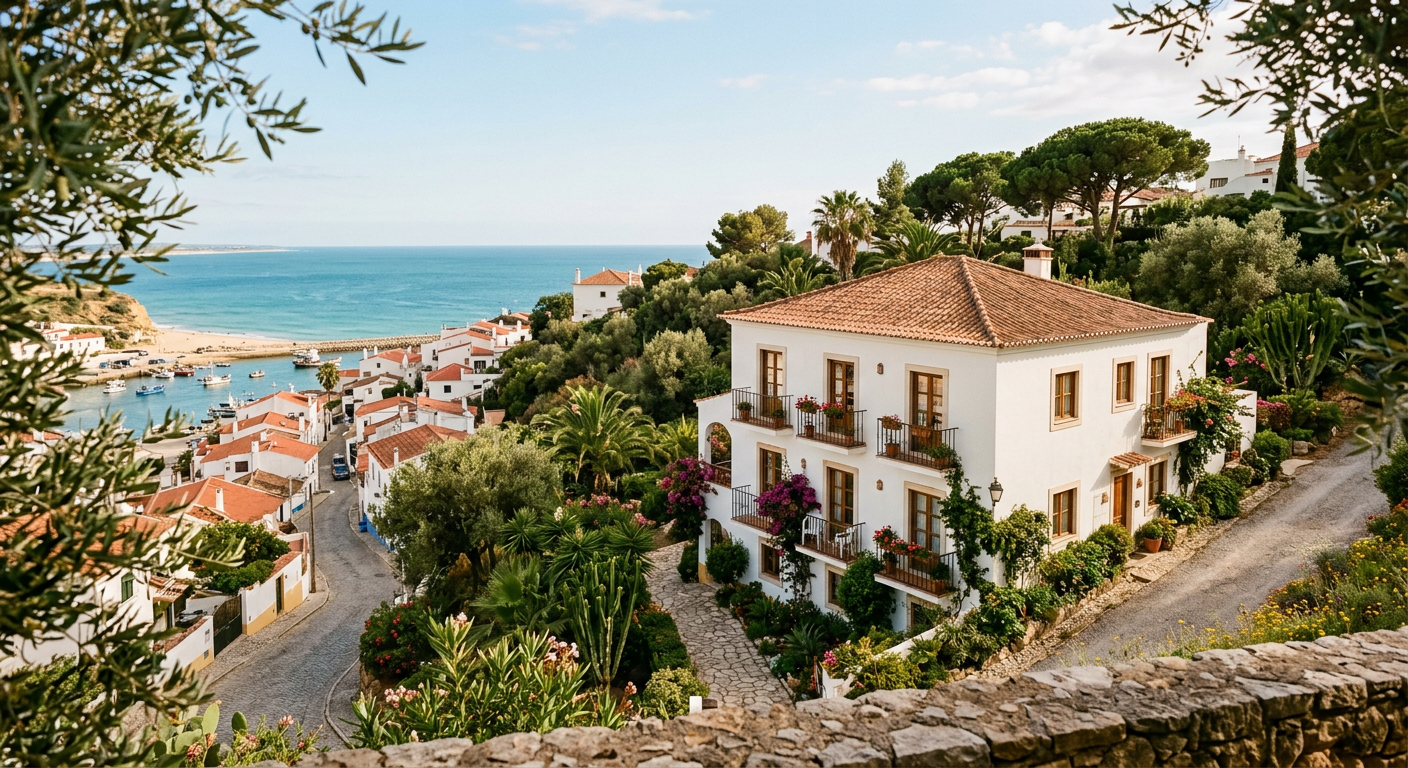

Do you dream of having your own place under the Portuguese sun, a sanctuary outside your home country? More and more Dutch and Belgian residents are considering the purchase of a second home in Portugal as an investment, holiday home, or a place for (partial) retirement. A common question is how to finance such a purchase. Specifically, the mortgage Portugal second home is a subject of great interest. This article dives deep into the options for obtaining a mortgage in Portugal for your second home and highlights important considerations for this significant decision.
The Portuguese real estate market has been very popular in recent years, and for good reason. With its beautiful coastlines, rich culture, favourable climate, and hospitable population, Portugal offers an unparalleled quality of life. Whether you are looking for vibrant city life in Lisbon, a relaxing villa in the Algarve, or an authentic country house in the Alentejo, financing your dream home in Portugal requires good preparation and knowledge of local regulations.
01What are the possibilities for a mortgage for a second home in Portugal?
Obtaining a mortgage for a second home in Portugal is generally quite possible, both through Portuguese and international banks. However, conditions and the financing percentage can vary. Most banks finance between 60% and 80% of the lower of the purchase or appraisal value for a second home. This means you must account for a significant personal contribution.
Mortgage through a Portuguese bank
Portuguese banks are often most familiar with the local market and specific procedures. They can offer attractive products, sometimes with more favourable interest rates than you might find in your home country, depending on the economic situation. It is important to be well-informed about the conditions, such as the term, interest rate (fixed or variable), and any additional costs. Furthermore, it is often a requirement to open a Portuguese bank account and apply for a tax identification number (NIF). One of our advisors can help you with the necessary steps and contact with various banks.
Mortgage through a Dutch or Belgian bank
Some Dutch or Belgian banks offer the possibility of granting a mortgage based on collateral in the Netherlands or Belgium to finance a second home abroad. This can be useful if you already have equity in your current home. Obtaining a mortgage directly from a Dutch or Belgian bank for a property in Portugal is less common, as they are often unfamiliar with foreign collateral and legal structures. However, it is always advisable to discuss the possibilities with your current bank.
Factors influencing your mortgage application
Several factors play a role in the assessment of your mortgage application. These include your income, assets, age, and the value of the property you wish to purchase. Banks will make a thorough analysis of your financial situation to ensure your repayment capacity. The condition and location of the property are also important; these partly determine the appraisal value and thus the maximum mortgage.
"Good preparation is essential when applying for a mortgage in Portugal. Ensure all your documents are in order and be transparent about your financial situation. We are happy to help our clients through this process, from the first contact to the final key handover." - Bryan Wierckx, Advisor at Atlanticasa
02The process of a mortgage application in Portugal
The mortgage application process in Portugal may differ slightly from what you are used to. Atlanticasa can guide you through every step so that you are well-prepared. Below is a general overview:
- Orientation and advice: Before you start searching for a property, it is wise to have an idea of your financing options. We can put you in touch with mortgage advisors specialised in the Portuguese market.
- Collecting documents: You will need to provide various documents, such as identity proof, proof of income, tax returns, and bank statements. There are sometimes additional requirements for non-residents.
- Finding a property: Once you have an indication of what you can borrow, you can specifically search for your dream home. View our extensive selection of quality real estate throughout Portugal, including various apartments in the Algarve.
- Pre-approval or offer: After you have found a suitable property, the bank can issue a pre-approval or make a formal mortgage offer based on the property and your financial situation.
- Appraisal and legal investigation: The bank will have the property appraised. Additionally, a legal investigation (due diligence) of the property is essential to be certain of ownership rights and any encumbrances. This is part of our general guide to buying a house in Portugal.
- Final mortgage offer and notary: After approval of all documents and investigations, the final mortgage offer follows. The signing of the purchase deed and the mortgage deed takes place at the notary.
Important considerations and tips
- Closing costs: In addition to the purchase price of the property, you must take 'closing costs' into account. These include transfer tax (IMT), stamp duty (Imposto de Selo), notary fees, and registration fees. These costs can vary but are often between 6% and 10% of the purchase price.
- Tax aspects: Inform yourself well about Portuguese tax rules for property owners. Think of the annual property tax (IMI) and any wealth tax. Read more about what wealth tax in Portugal entails.
- Exchange rate risk: If your mortgage is in euros and your income is in another currency, take exchange rate fluctuations into account.
- Language barrier: The process can be complex, especially if you do not speak the local language. An experienced estate agent like Atlanticasa can guide you excellently here.
- Insurance: Building insurance is mandatory when taking out a mortgage. Life insurance is also often requested.
Practical tips for your mortgage application
- Start collecting the necessary documents as early as possible.
- Seek advice from an independent mortgage advisor specialised in the Portuguese market. Or contact Atlanticasa to support you in this.
- Compare offers from different banks to find the best conditions.
- Ensure sufficient equity, at least 20-40% of the purchase price, plus closing costs.
- Take extra costs into account, such as advisory fees, appraisal costs, and fees for opening a bank account.
- Have all legal documents screened by an independent lawyer.
Purchasing a second home in Portugal is a dream within reach for many. With the right guidance and a clear insight into financing options, including the mortgage Portugal second home, this dream becomes a reality. Atlanticasa is happy to assist you with our expertise and our network of reliable professionals in Portugal.
03Frequently asked questions about a mortgage for a second home in Portugal
Can I get a mortgage in Portugal as a non-resident?
Yes, as a non-resident, you can certainly obtain a mortgage in Portugal. Portuguese banks are accustomed to international buyers. However, requirements are often stricter and the financing percentage is usually lower than for residents.
What is the maximum term of a mortgage in Portugal?
The maximum term of a mortgage in Portugal is usually 30 to 40 years, but many banks apply an age limit of 75 to 80 years at the end of the term. This means the term may be shorter if you are older.
What documents do I need for a mortgage application as a non-resident?
Usually, you need a valid passport, Portuguese tax identification number (NIF), recent payslips, tax returns from recent years, bank statements, a credit report from your home country, and possibly marital status documents. A mortgage advisor can provide you with a complete checklist.
04Contact Atlanticasa
Are you ready to take the next step towards your second home in Portugal? Atlanticasa is your partner in success. We guide you not only in finding the perfect property but also in navigating the complexity of financing and legal aspects. Contact us today for a non-binding conversation and discover how we can help you realise your dream of a mortgage Portugal second home.